.png)
Network politics, a brutal time-slot change, and a last-minute creative revival couldn't save one of daytime's longest-running soaps.
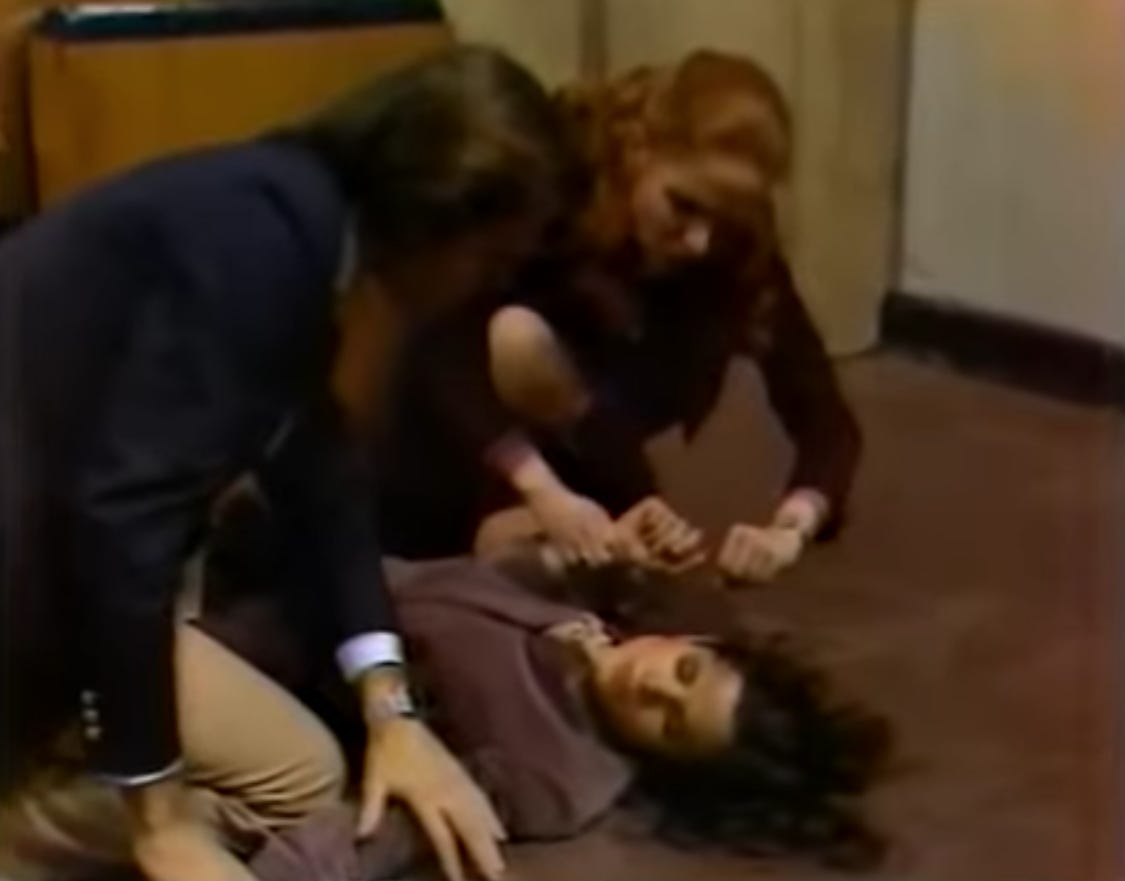 |
| CBS soap opera Love of Life ended on February 1, 1980, after Betsy Harper collapsed on the witness stand. |
Contributing Writer, We Love Soaps Insider
For more than 45 years, Love of Life fans have wondered what happened after Betsy Harper collapsed on the witness stand.
When CBS aired its final episode on February 1, 1980, viewers were left with one of daytime’s most memorable unresolved cliffhangers and no indication the story would ever continue.It was a cruel ending for a show that had been a CBS staple since its premiere on September 24, 1951. Created by Roy Winsor, Love of Life survived cast changes, sponsor shifts, and network regime changes, and for most of its run, it pulled respectable ratings. As late as 1975 and 1976, it was beating General Hospital and One Life to Live.
Then the ground shifted under all of daytime.
The Hour Expansion Squeeze
In 1975, soaps began expanding from 30 minutes to 60, leaving less room on the afternoon schedule. Rumors swirled in 1978 that Search for Tomorrow would be the one to go to an hour.
Creator William J. Bell said CBS had been pressuring him to expand The Young and the Restless. He, producer John Conboy, and senior writer Kay Alden were united in resisting.
Love of Life was already vulnerable. By 1977, it had slipped into the bottom three in the Nielsens. By October 1978, it was dead last.
Longtime producer Jean Arley and associate producer Tom DeVilliers were fired. CBS brought in Cathy Abbi, who had been on the production staff of The Young and the Restless. She immediately upgraded the production. Hundreds of thousands of dollars were spent on new sets designed to rival the show she had just left.
Behind the scenes, the writing was also faltering. The press zeroed in on head writer Jean Holloway, arguing she was in over her head. Her sole focus was a new character, Bambi Brewster, with longtime favorites reduced to reacting to her. Veteran scribe Ann Marcus was set to take over just as CBS made its next move.
The Fatal Time Slot Change
CBS Daytime executive Mike Ogiens decided to rearrange the lineup in a way that would prove fatal to Winsor’s soap.
Love of Life would move from its longtime home at 11:30 a.m. to 4:00 p.m.
The impact was immediate. The show had been cleared by an average of 181 affiliates in its late-morning slot. Starting the week of April 23, 1979, 40 affiliates dropped it altogether. Ratings fell from a 5.5 to a 4.4. The next week, they collapsed to a 3.3.
Many observers have long wondered whether the move was also designed to increase pressure on Bill Bell to expand The Young and the Restless. The timing certainly fueled that perception. Just two months after Love of Life was moved, CBS announced that Y&R would go to an hour.
As Bell later remembered, even as he continued to resist, the network told him his show was going to an hour with or without him.
Y&R producer John Conboy spoke candidly to the press about their trepidation:
“I have very ambivalent feelings about the show’s going to an hour, because so far I have not seen a show that went to an hour work as well… We’re all looking for the panacea of how to do an hour. It’s a drain on writers and producers.”
Back at Love of Life, the cast and crew were furious. Associate producer Paul Sladkus called Ogiens’ decision a mistake.
“A soap builds an audience. It becomes a habit which viewers plan their day around. To totally change the time slot is deadly. Also we’re not preceded by a soap.”
The Marcus Revival
What happened next is often overlooked. Ann Marcus, whose credits included Love Is a Many Splendored Thing, Search for Tomorrow, Mary Hartman, Mary Hartman and Days of Our Lives, re-energized Love of Life.
She returned the focus to longtime characters like Van, Bruce, Ben, Meg, Betsy, and Arlene, while amping up the drama with complex villains like Mia and Elliott. Exciting new characters like Liane and Amy, played by a young Dana Delany, gave viewers of all ages something to watch.
Journalist Lynda Hirsch praised the turnaround, noting: “A day on Love of Life is comparable to what was once a week on that show.”

When the soap celebrated its 28th anniversary in September 1979, cast and crew past and present gathered. John Aniston, Jessica Walter, Nancy Marchand, and Beatrice Straight were among the alumni who returned. Producer Cathy Abbi ended her speech with what sounded like a public appeal to CBS: “There has been 28 years of Love of Life, and we have a lot more love to give.” Christopher Reeve, who played Ben from 1974 to 1976, also dropped by the set to catch up with old friends.
The Last Story
Marcus planned a story that would play through the final episode. She looked back on how it evolved in her autobiography Whistling Girl:
“I concocted a story paying homage to Theodore Dreiser’s novel, An American Tragedy. Or was it the movie I paid homage to called A Place in the Sun, starring Elizabeth Taylor and Montgomery Clift?”
Producer Abbi arranged a location shoot at Lake Tiorati in Harriman State Park to facilitate the story.
“When a script calls for running through leaves, or boating and water scenes, it’s time to head for the real thing. We believe our audience enjoys the location scenes from time to time. We do too.”
The story: Elliott Lang, played by Ted LePlat, raped his estranged wife Betsy, played by Margo McKenna, leading to a pregnancy. Betsy and her former husband Ben Harper, played by Chandler Hill Harben, reconciled and planned to reunite. Ben’s former lover Mia Marriott, played by Veleka Gray, conspired with Elliott to keep them apart.
Mia called Betsy at the Crestline lake house to taunt her that Ben could never accept another man’s child. Distraught, Betsy ran past Ben toward the lake. Seeing a rowboat, she got in to find a place to think. Ben followed and they agreed to talk.
As he rowed, he noticed a snake slithering from under her seat and wrapping around her body. He told her to stay still as he tried to remove it with an oar. In a panic, she fell overboard. She lost the baby.
Elliott then claimed Ben had attacked Betsy and intentionally hit her, demanding Ben be charged with murder for the unborn child. Betsy, suffering memory loss about the incident in the boat, couldn’t corroborate Ben’s story.
There was one bright spot that December: the Christmas wedding of Van and Meg’s widowed mother Sarah to Professor Timothy McCauley.
Shortly after it aired, CBS lowered the boom. Love of Life was canceled.
The Final Days
Abbi was told on Sunday, January 6, 1980, that the last episode would air February 1. She pulled out her phone book and began calling the cast and crew. Longtime director Larry Auerbach helped by reaching out to actors including Ron Tomme, who played Bruce. Audrey Peters, who had played heroine Van since 1959, was on vacation in Florida when they phoned her with the bad news.
Head writer Ann Marcus was livid and immediately contacted CBS executives.
“Mike Ogiens and I went round on this. He wanted everything tidied up. But we didn’t have enough notice so we’ve left things kind of hanging… I hope they get a lot of angry calls about it. Isn’t that mean of me?”
Confronted by the press about the cancellation, Ogiens conceded that “maybe” his scheduling decision had something to do with it, but pointed out the soap was in a “three-year decline.”
The final tape day was January 24. Several people were sick with colds, and W.T. Martin missed the last few days of shooting, leaving his character Hal to be played by multiple actors.
CBS News came to the set to film the cast and crew on the last day. Audrey Peters, sitting in the makeup chair, got emotional talking to the reporter. In a follow-up interview she said:
“I have nothing to do right now. I’m sitting in a courtroom, not opening my mouth on camera. It’s kind of frustrating. Maybe it’s good because if I had a heavy scene, I might break down.”
Tudi Wiggins, who played her TV sister Meg, waxed poetic about the situation:
“Love of Life, to me, is a lady and she’s going away at 28, and that’s very sad. No matter what’s been done to her, she’s been loved. What is wonderful is she’s leaving as a lady.”
Should the show have given Audrey Peters the last line? Personally, I think so. They could have had Van, holding Bruce, looking at Betsy on the witness stand and saying, “She has to be okay. She has such a love of life.”
In the end, the credits rolled over longtime director Larry Auerbach walking past the sets of fictional Rosehill for the last time and closing the door to Studio 41.
“It’s awful,” he said. “I put it on the air and I’m taking it off.”
“We’ll Be Together Again” played in the background during his final stroll. Search for Tomorrow ended in December 1986 with the same song. Roy Winsor, who created both soaps, died shortly afterward on May 31, 1987.
The irony of canceling Love of Life so Y&R could become an hour? Y&R’s ratings sank. In 1979, it frequently ranked number one. The following year, not only were ABC’s soaps beating it, but CBS’s Guiding Light and As the World Turns were often outperforming it as well.
But the story didn’t actually end when the credits rolled on February 1, 1980.
While researching the series, fellow historian Mark Faulkner discovered that Ann Marcus’s story outlines extended beyond the final broadcast. I obtained copies from the University of Wyoming, where Marcus’s papers are archived, and they reveal — for the first time — what would have happened next.
In Part Two, we’ll finally answer the question Love of Life fans have been asking for more than 45 years: Did Betsy survive? What became of Ben, Mia, Elliott, Van, Meg, Amy, Arlene, and the rest of Rosehill?


0 Comments